Post-Storm Infrared Roof and Building Inspections in South Florida
The Storm Passed. The Damage Didn't.
After a tropical storm, hurricane, or severe rain event, the visible damage is only part of the story. Wind-driven moisture can penetrate roofing systems, push through building envelope gaps, and travel laterally through wall assemblies, all without leaving an immediate trace. For days or weeks after a storm, moisture is moving through your building silently, setting the stage for mold growth, structural deterioration, and significant repair costs.
Delta Infrared Solutions has spent more than 15 years of helping South Florida property owners, managers, and institutions find what storms leave behind. Our post-storm infrared inspections locate hidden moisture intrusion before it spreads, giving you documentation, clarity, and the information you need to act quickly.
Who Should Schedule a Post-Storm Infrared Inspection
- Hotels and resorts: occupied guest rooms cannot wait for visible staining; moisture must be found fast
- Condominium buildings: unit owners and associations both benefit from early detection and documentation
- Schools and universities: moisture damage in educational facilities affects indoor air quality and learning environments
- Hospitals and healthcare facilities: mold risk in healthcare settings is a regulatory issue, not just a maintenance one
- HOA communities: boards have fiduciary responsibility to document and address storm damage promptly
- Commercial office buildings and retail centers: tenant relationships and lease obligations depend on building condition
- Industrial and warehouse facilities: equipment and inventory may be at risk from hidden roof moisture
What We Look For After a Storm
- Roof membranes, flashings, and penetrations
- Roof-to-wall transitions and parapet areas
- Exterior wall assemblies and cladding systems
- Window and door frames and glazing systems
- Ceiling assemblies below the roofline
- Areas around HVAC penetrations and mechanical equipment
- Elevator shafts and stairwell enclosures
Why Speed Matters After a Storm
Moisture damages compounds quickly. Within 24 to 48 hours, conditions for mold growth can become established in wet building materials. Within days, moisture can migrate further from the original entry point. The faster you identify where moisture has entered and how far it has traveled, the less it will cost to remediate, and the better your documentation will be for insurance purposes.
Early infrared documentation after a storm is also critical for property insurance claims. Our reports provide objective, timestamped evidence of the nature, location, and extent of moisture intrusion, the kind of documentation that supports a clear and defensible claim.
Our Process
What the Post-Storm Inspection Process Looks Like
Step 1: Emergency Scheduling
After a significant storm event, we prioritize post-storm inspection requests and work to schedule as quickly as conditions allow. We coordinate access with your team and confirm which areas of the property have raised the most concern.
Step 2: On-Site Infrared Scanning
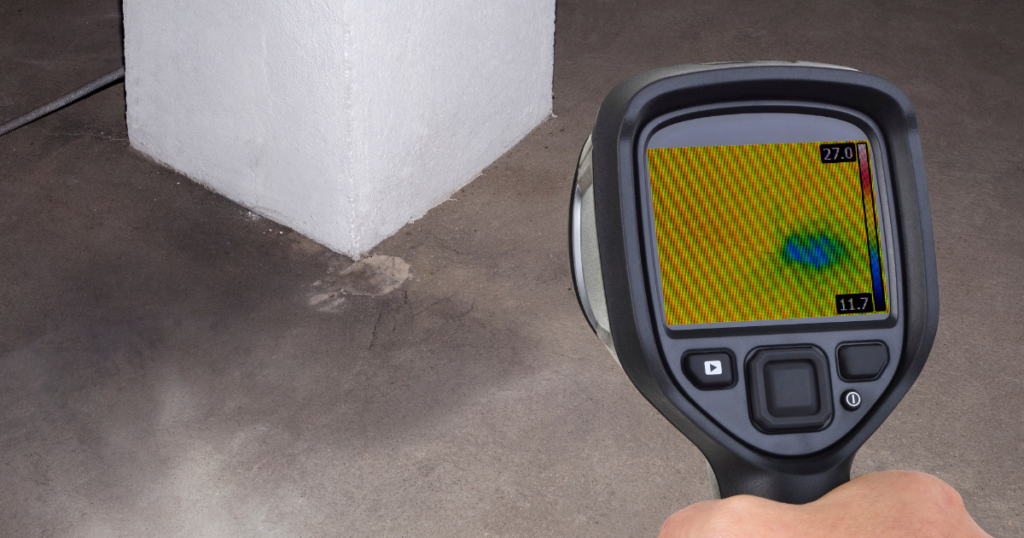
Our thermographers scan roofing systems, building envelope areas, interior ceilings, walls, and any areas where water may have traveled. Inspections are conducted under conditions appropriate for moisture detection, and we document everything with both infrared and visible-light photography.
Step 3: Moisture Documentation Report
You receive a clear, professional report showing where moisture was detected, how extensive the affected areas appear, and what follow-up steps we recommend. The report is formatted to support conversations with your insurance adjuster, contractor, and building engineer.