Building Recertification Infrared Inspections in West Palm Beach & South Florida
Florida Has Changed the Rules. Is Your Building Ready?
After a series of structural tragedies across the state, Florida enacted Senate Bill 4-D, one of the most significant building safety laws in state history. For condominium and cooperative buildings three stories or taller, milestone inspections are now mandatory and for buildings with electrical service of 400 amperes or greater, a certified infrared thermography inspection is a required component of that process.
At Delta Infrared Solutions, we have spent more than 15 years helping South Florida building owners, property managers, condo associations, and HOA boards navigate inspection requirements with confidence. Our certified thermographers produce the detailed, professional reports that engineers, building officials, and associations need to satisfy compliance requirements and protect their properties.
Why Does Your Building Need an Infrared Recertification Inspection?
You should contact us if:
- Your building is a condo or co-op three stories or taller
- Your building is approaching its 25-year or 40-year milestone inspection
- Your engineer or building official has requested an infrared inspection as part of the recertification package
- Your board or property manager wants to be proactive before a deadline arrives
What the Florida Law Actually Requires
Florida Senate Bill 4-D (enacted 2022) mandates structural milestone inspections for condominium and cooperative buildings:
25-year
Inspections for buildings within three miles of the coastline
30-year
Inspections for all other qualifying buildings
Phase 2
Inspections if Phase 1 reveals concerns that require further evaluation
Additionally, local jurisdictions including Boynton Beach and others in Palm Beach County, specifically require a certified infrared electrical inspection for any building whose main electrical service operates at 400 amperes or greater as part of the recertification package. This inspection must be performed by a qualified, certified thermographer and submitted as a formal written report.
Beyond state law, the International Property Maintenance Code (IPMC) and local amendments increasingly reference thermographic documentation as part of structural safety verification.
Our Process
What to Expect From Our Recertification Inspection Process
Step 1: Consultation and Scoping
We begin with a conversation about your building: its age, size, electrical service capacity, inspection timeline, and what your engineer or building department has specifically requested. We confirm what must be documented and coordinate access needs with your team.
Step 2: Certified On-Site Inspection
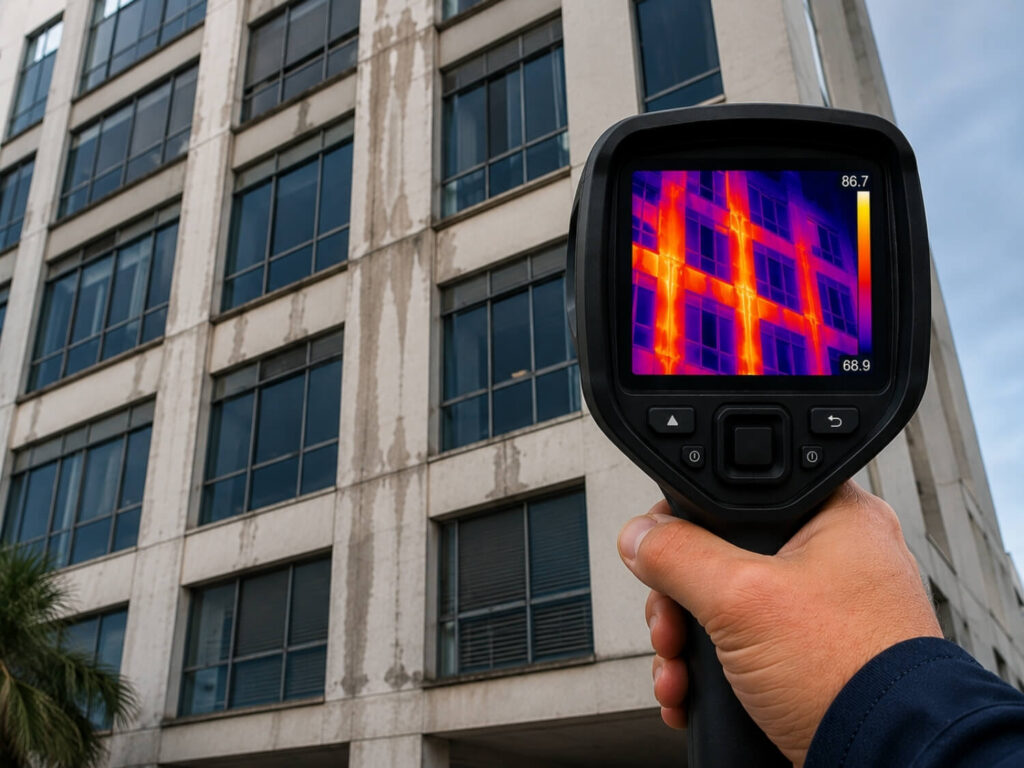
Our certified thermographers arrive with professional-grade infrared cameras and conduct a thorough scan of the required building systems and areas. For electrical components, we scan panels, switchgear, meter centers, disconnects, and related equipment while systems are energized and under load, because that is when thermal anomalies are most visible. We also document building envelope, moisture patterns, and structural areas as requested.
Step 3: Analysis and Report Preparation
Every thermal image is analyzed by our experienced team. Anomalies are identified, classified by severity, and documented with both infrared and visible-light photography. Our reports are formatted to meet the documentation requirements of Florida's recertification process and to be submitted alongside engineering reports.
Step 4: Report Delivery and Review
You receive a professional written report with findings clearly explained. We are available to answer questions from your board, engineer, or building department and if needed, we can provide supplemental documentation or clarification to satisfy the inspection team.
What Happens If We Identify a Problem?
If our inspection reveals a heat anomaly, moisture pattern, or electrical concern, we do not leave you guessing. Our reports classify findings clearly, from minor observations worth monitoring to significant anomalies that require prompt follow-up.
We work alongside your engineer or contractor, not in place of them. Our role is to provide clear thermal documentation and expert interpretation. If an electrical concern requires repair, we will explain the finding in plain terms so your licensed electrician or contractor understands what to address. After repairs are made, we can return for a follow-up scan to document that the condition has been resolved, a step that is increasingly requested by building departments and insurers.
Why Waiting Is Risky
Florida’s recertification deadlines are firm. Buildings that miss inspection windows can face building department stop-use orders, loss of certificates of occupancy, or mandatory evacuation proceedings. Beyond the legal exposure, the purpose of these inspections is life safety, the same type of hidden structural and electrical deterioration that Florida’s new laws were designed to find before it becomes a crisis.
With more than 15 years of serving South Florida buildings, we have seen what is missed when thermography is skipped or performed by underqualified personnel. A properly conducted, certified infrared inspection is one of the most valuable tools available to the people responsible for keeping a building safe and compliant.
Serving All of South Florida
Based in West Palm Beach and serving all of South Florida, Delta Infrared Solutions works with condominium associations, co-ops, HOA communities, property managers, building owners, and commercial facilities that need reliable infrared inspection support.